
Whoa. Logging into an exchange feels trivial until it doesn’t. Seriously? Yep. My instinct said it would be a quick how-to, but then I remembered the dozen times friends called me at 2 AM when something about their OKX session went sideways. Something felt off about the “simple” login steps—so let’s walk it through the way a trader actually needs it: clear, practical, and not sugarcoated.
Okay, so check this out—first impressions matter. When you land on an exchange login page you want three things: confidence that the site is legit, clear steps to get in, and a fallback plan if 2FA or verification acts up. On one hand, OKX’s interface is polished and user-friendly; on the other, that polish can hide important details you care about as a trader—like active sessions, IP notifications, and withdrawal whitelist options. Initially I thought a short checklist was enough, but actually, wait—let me rephrase that: you need a checklist plus a few habits to avoid expensive mistakes.
Start with verification of the page itself. Look at the URL, the certificate, and your browser extension list. My gut feeling about phishing links saved a friend once—he clicked a link in a DM and the site looked identical. He was lucky: he noticed the URL was slightly off. Don’t be that person. If you want a quick reference for the official login flow, here’s a helpful resource: https://sites.google.com/cryptowalletextensionus.com/okx-login-web/.
Step-by-step, here’s how I log into OKX as a regular spot trader. Short version first:
— Use a strong unique password.
— Enable 2FA (Google Authenticator or an authenticator app—seriously, don’t use SMS if you can avoid it).
— Confirm device authorization and IP alerts.
— Check account permissions and withdrawal whitelist.
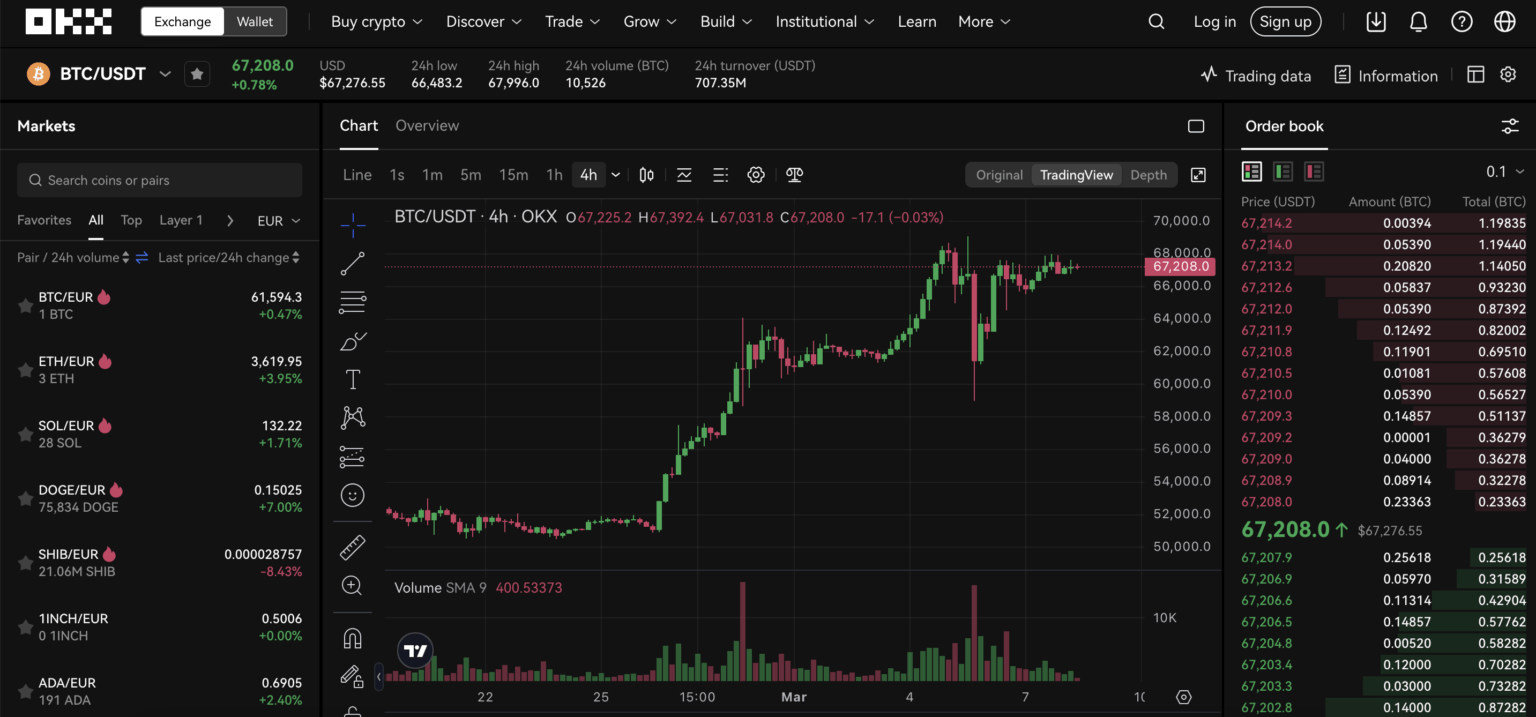
Deep dive: the process and why each step matters
First: password hygiene. Sounds basic. But I still see reused passwords across exchanges and other services. Hmm… that part bugs me. If one site leaks, your OKX account could be toast. Use a password manager. It’s boring but effective. On a personal note, I’m biased toward passphrases—they’re easier to remember and harder to crack. Also, set a password you don’t share with any email tied to recovery questions.
Two-factor authentication—this is where traders trip up the most. Google Authenticator, Authy, or another hardware-backed solution? On one hand, Authy syncs across devices which is convenient; though actually, it introduces a single-point-of-failure risk if your Authy account is compromised. On the other hand, a hardware key or an app that stores keys locally is more secure. Initially I favored convenience. Later I switched to a more conservative approach after an incident where my phone died mid-withdrawal and the backup recovery was messy… very very important to set recovery codes and store them offline.
Device & session management matters too. OKX shows active sessions and allows you to terminate suspicious logins. Use that feature. If you ever see a country or IP that’s not yours—log out immediately and rotate passwords. Also enable email alerts for new device logins. Trust me, getting an unexpected “New login” email at 4 AM will make you move faster than any compliance notice.
Now, verification tiers and KYC—ugh, the paperwork. You’ll go through identity verification to raise limits and enable fiat rails. I’ll be honest: the KYC step is where many traders stall because of documents or selfies failing automated checks. If you’re preparing, crop your ID correctly, use good lighting, and avoid cheap laminates. And small tip: don’t submit photos with glare. Sounds obvious. Yet people do it. For most US users, standard ID + selfie suffices. If you run into repeated rejections, contact support with a clear explanation and try a different method (sometimes a passport works better than a state ID).
Withdrawal whitelist—set it. This is a non-negotiable safety net. Add your cold wallet or trusted addresses to the whitelist so even if someone gets into your account, withdrawing becomes harder. On one hand, it adds friction; though on the other, it could save thousands. Hmm… slightly inconvenient but worth it for peace of mind.
What about sessions across devices—laptop, phone, tablet? Be mindful. I keep a single primary trading machine and use read-only settings elsewhere. If you trade actively on spot markets, multi-device latency matters; but exposing keys or session tokens across too many devices increases risk. My rule: fewer devices, better control. (oh, and by the way…) if you use browser extensions for convenience—check them. Some extensions request wide permissions and that’s scary.
Common problems and realistic fixes
Problem: 2FA lost when phone dies. Fix: use backup codes stored offline, or transfer your authenticator key before swapping phones. Seriously, this is one of the most avoidable issues. Problem: account locked after too many failed attempts. Fix: go through OKX support, provide KYC docs, and be patient—it can take time.
Problem: Suspicious withdrawal. If you get an email about a withdrawal you didn’t authorize, freeze the account and contact support immediately. Also post-incident, rotate all passwords and check for any API keys you might have created. API keys are powerful—treat them like bank account credentials.
API keys—pro tip. If you use APIs for bots or spreadsheets, grant minimal permissions. For spot trading bots, you usually only need trade permission, not withdraw. On one hand, giving a bot withdraw rights makes life easier when automating; though actually, it’s a big risk. Separate accounts or sub-accounts with limited scopes help manage this risk.
Latency and connectivity—traders care about this. If the login process feels slow or times out, check your network, DNS, and any VPN configurations. Sometimes VPNs trigger extra verification. If you rely on low-latency connections, test the round-trip time and keep a backup route or broker in mind. I had one trading day where my primary ISP choked and the backup route saved a trade. Weird, but true.
FAQ
How do I recover access if my 2FA app is gone?
Use the backup codes you saved when you enabled 2FA. If you didn’t save them, contact OKX support and prepare to verify identity via KYC. That process can take time, so plan ahead. I’m not 100% sure how long support queues are on a busy day—it varies.
Is SMS 2FA okay?
SMS is better than nothing, but it’s vulnerable to SIM-swap attacks. Prefer app-based or hardware 2FA. If you must use SMS, enable carrier-level protections for your phone number and monitor for SIM-change alerts.
Can I use OKX for spot trading only?
Yes. You can use spot markets without margin or derivatives. Just fund your spot wallet, confirm balances, and execute trades. If you’re only spot trading, you still want safety measures like whitelists and 2FA.
Alright—final thought. Logging into OKX is simple if you treat it like an entry point to something valuable. Protect that entry. Be a little paranoid, but not paralyzed. My advice? Keep things tidy: strong unique passwords, app-based 2FA, withdrawal whitelist, minimal API permissions, and regular audits of active sessions. These habits are small, but over time they make you a lot harder to hack, and a lot easier to sleep at night.
So go do it—update your settings, and maybe update that old password you’ve been meaning to change for months. You’ll thank yourself later, even if you don’t feel dramatic about it right now…